Eureka: Phased and Confused


... in which Carter attempts to uncover the identity of “Captain Eureka,” the town’s new superhero.

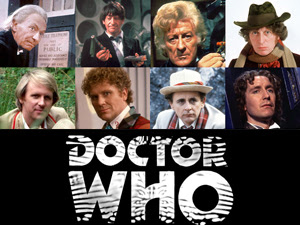
Doctor Who: Spearhead From Space

“We deal with the odd, the unexplained, anything on Earth... or beyond”

After six years of monochrome adventuring through time and space ‘Spearhead from Space’ saw Doctor Who undergo a complete transformation.

Twin Peaks: Traces to Nowhere


“Who has the other half of this heart?”

The focus of this episode is, quite reasonably, the people closest to Laura. James Hurley, Bobby and Mike, Donna, even Josie: these are the most logical people for Cooper to be interested in, as the average teenager is likely closest to the people in her peer group. They’re also the people most likely for us to be interested in, as armchair detectives—which is why this episode reveals more to us about these kiddos than even Cooper discovers.


I had forgotten this element Twin Peaks: it’s a well written detective story. It effectively negotiates the problem of knowledge: we sometimes know more than the authorities, which creates tension, but Special Agent Dale Cooper does interview the right people at the right time, deals with evidence as he finds it, and eliminate the unlikely suspects. He is generally a very good cop, which means he’s usually one step ahead of the viewers.

In addition to interviews and hard evidence, Cooper relies on his intuition. He knows James didn’t kill Laura because he senses James’s inner sweetness and honesty. That intuition will frequently serve him well, especially as it frequently prevents Cooper and Harry from disagreeing: Harry knows James probably didn’t kill Laura, either, because he has known James for quite a while. The Harry/Cooper relationship is still being established, but so far they seem to be in accord. (Doc Hayward, despite not knowing James, also seems to be a fan: whereas in the pilot he didn’t let Mike into the house, here he invited James to dinner. That tells us something about both Doc and James.)

Cooper’s intuition and Harry’s prior knowledge also point to Bobby and Mike as general nogoodniks—an assessment it’s hard to disagree with. Here the show indulges in some taunting: we know more about Bobby’s and Mike’s relationship with Leo and drug-running than Coop and Harry do. And if the kindly Major Briggs can slap Bobby—well, that’s sort of the reverse of Doc Hayward inviting James to dinner.

While the investigative focus might be the teenagers, Laura’s death isn’t forgotten—and neither are the wacky folks who populate Twin Peaks itself. We got a glimpse of what life with Nadine must be like for Big Ed, Pete Martell’s relationship with Josie his sister-in-law (complete with fish coffee!), Shelly Johnson’s daily domestic struggles, and Catherine Martell’s schemes with Ben Horne.

However, the most fascinating wacky townsperson is, for me, Major Briggs. Don S. Davis played Scully’s father on the X-Files (where he is just as wonderful), and was also in SG-1. Here, his distinct manner of speaking and general reasonable combine perfectly with his philosophizing. I’ve quoted nearly his entire monologue below, and a long monologue it is.

Cooper also met the Log Lady, whose…um…mysterious ways have become something of a byword for Twin Peak’s wackiness. Cooper doesn’t succeed with the Log Lady here: she has something to say, but Cooper’s reticence to fully embrace the weirdness prevents her (and her log) from being completely open and honest.

Doc Hayward’s autopsy report near the episode’s beginning keeps Laura’s death in the back of our minds. He delivered Laura and then had to watch her dissected, and to learn the slow, painful way that she died—a way so painful that it may have helped Ronnette slip into a coma. Twin Peaks doesn’t mince words when it comes to cruelty, but this doesn’t feel like the voyeuristic sadism of some more recent detective shows or even some later episodes. This feels like an awareness that Laura’s murder was a terrible, prolonged crime; that Laura suffered as no person should ever suffer; and that the people who are aware of the details and knew Laura are deeply troubled.

The reactions of the Palmers and the Polaskis were effectively contrasted. The Polaskis seem to be subdued in their grief, more beaten down than crazy. Sarah Palmer, however, seems to have either gone mad or turned psychic: she sees Laura’s face (cheaply) transposed over Donna’s, and hallucinates? sees? has a vision? of an impossibly creepy long-haired guy hiding behind the living-room furniture. That scene gave me shivers the first time and during my re-watch even though I knew it was coming. I kept checking behind me to see if he’d miraculously appeared behind my couch. Cats, protect me!

Meanwhile, Cooper met Audrey Horne, and certainly fell—at least a few feet—for her. It’s fascinating to see him turned on and then reining himself in as he realizes she violates two of his rules: she’s in high school, and she’s associated with his case. But the allure is certainly there. How can I blame him? Sherilyn Fenn is gorgeous, and Audrey was throwing herself at him. Cooper may be a wonderful detective, but he’s got a weakness for the ladies.


Bits and Pieces:

• Cooper: “Diane, it struck me again this morning. There are two things that continue to trouble, and I’m speaking now not just as an agent of the Bureau but also as a human being: What really went on between Marilyn Monroe and the Kennedys? And who really pulled the trigger on JFK?”

• Cooper: “I’d like two eggs over hard. I know, don’t tell me: hard on the arteries. But old habits die hard. Just about as hard as I want those eggs.”

• Major Briggs: “Rebellion in a young man of your age is a necessary fact of life. Candidly, a sign of strength. In other words, Robert, I respect your rebellious nature. However, being your father, I am obligated to contain that fire of contrariness within the bounds established by society, as well as those within our own family structure. Robert, I note your reluctance to enter into a dialogue with me, your father. There are times when silence is golden. Silence can be taken many ways—as a sign of intelligence. The quieter we become, the more we hear. [Slap] Now, I am a tolerant man. My patience has its limits. To have his path made clear is the aspiration of every human being in our beclouded and tempestuous existence. Robert, you and I are going to work to make yours real clear.”

• Laura: “I just know I’m gonna get lost in the woods again tonight.” I’ll bring up this quote in my review of episode 3, “Rest in Pain.”

• Nadine has discovered the secret to a completely silent drape runner. Cotton balls, with an emphasis on the balls.

• Laura used to tutor Josie Packard, too. How did Laura have all this time on her hands? She must have been the busiest teenager ever.

Clues and Questions

• Shelly found blood on Leo’s shirt.

• Leo had told Shelly that he was in Butte, Montana on the night Laura died, but Bobby told Mike that he saw Leo that night, so we know he was lying.

• Big Ed told Harry that Jacques Renault was tending bar the previous night, and might have slipped Big Ed a mickey. Significant?

• Hawk and Big Ed both rubbed fingers next to their eyes in the sheriff’s station. What’s up with that?

• Who is the one-armed man, where did he go, and what does he want? Perhaps Dr. Richard Kimble can help.

• Laura made tapes for Dr. Jacoby, who seems to really, really enjoy listening to her troubles. And he’s the one who found the necklace and took it—why? How?


Second episodes are always tricky. On a formulaic show, the second episode is typically an example of what the average standalone will be like. On a show like Twin Peaks, there really are no standalones, but this episode does reinforce that, despite the marketing campaign of “Who killed Laura Palmer?” this is a show that lives up to its name: it is about a town as well as a murder investigation. It’s not the most cohesive episode, as some scenes are about investigation, others are just about the tragedy’s impact, and others are about townspeople who don’t mention Laura at all. But it’s snappy, fast-paced, and filled with even more great dialogue than the long quotes I’ve included here.

Three and a half out of four damn fine cups of coffee.

Eureka: Show Me the Mummy!


... in which an ancient mummy queen and the scientists studying her go missing, as Allison struggles on her first day back at work.

True Blood: She's Not There


Eric: "Who would you rather trust? A vampire or a politician?"

Everything felt different. Maybe because everyone had different hair.

Eureka: I Do Over


... in which Allison and Stark’s wedding day turns into Groundhog Day for Carter.

The Killing: Orpheus Descending

“Every piece of this place hurts me.”

Look on the season finale of The Killing, ye Mighty, and despair!

I've put off writing this review because even thinking about this episodes just made me so angry I couldn't type. I can't remember the last time a TV series pissed me off as much as this. I'm actually surprised that I managed to hold back on the excessive swearing and ranting. But there's been enough excessive swearing and ranting about this finale already (not that there won't be some swearing).

So I'm going to keep this review short and to the point. This episode was bad. Really bad. Maybe the worst season finale I've ever seen. After enduring thirteen weeks of endless rain, numerous red herrings, perpetual misery and Darren Richmond we got absolutely zero return on our investment. Instead all we got was a great big slap in the face. Let me try and explain its awfulness in completely made up television mathematics. Basically, you take everything Heroes did after season one + Lorelai marrying Christopher in Paris x THIS ÷ ARRRRGGGGHHHH!!!! = 'Orpheus Descending'.

To date we still don't know who killed Rosie Larsen. That's been saved for season two. It wasn't enough that the writers made us wait this long, now they expect us to wait a whole year to find out who killed bloody Rosie Larsen. Well, to paraphrase Howard Beale, the eminent philosopher and poet, I'm as mad as hell, and I'm not going to watch The Killing anymore.

I'm done. Finished. No more for me, thank you very much.

The final deal breaker for me wasn't the show's refusal to finally reveal whodunit. My spider-sense had been tingling for a while on that one. No, the deal breaker was that 'shocking' final twist; Stephen Holder is working with a mysterious someone to actively frame Richmond for Rosie's murder.

I think I speak for everyone when I say, “What the fuck, Veena Sud?”

When I first started watching I feared I'd get something like this. That the writers would end with season with a massive twist that was more shocking than it was logical. But I never in a million years thought they'd do something this absurd. Holder was the only reason I was ever considering reviewing season two. Now we're being told he's a traitor. And a really stupid traitor at that. His plan to frame Richmond is so deeply flawed its almost moronic. Did he not think that someone might notify the police about the cameras being broken that weekend? He's the one who gave them Linden's number for Christ's sake!

Other Crimes and Misdemeanours

--Yesterday Linden was threatening Helo with child abduction. Today it was all “I hope you guys are having fun.” Again, What the fuck, Veena Sud?

--Gwen, of course Richmond would've been soaking wet when he got back to the hotel. Because in Seattle is never, ever stops raining.

--Mitch decided that her family didn't need her and left to walk the earth like Kane from Kung Fu or something. Stan didn't object or try to explain that he'd spent their savings on a house. So after losing their sister, Denny and Tommy have now been abandoned by their mother and will likely see their father go to jail for a very long time. I see a lot of therapy in their respective futures.

--Oh, and just so they could end things on a cliff-hanger, Belko, upset by the collapse of the Larsen family and all out of rocks to punch, watched Taxi Driver one too many times and decided to Jack Ruby Darren Richmond.

And so ends my time reviewing The Killing. It's been an up and down experience to be sure. Thank you to everyone who's stuck with me on this seemingly endless Odyssey of disappointment and rage. If any of you want to continue, then I wish you the best of luck and offer you my deepest sympathies.

Twin Peaks: Pilot


“Mr. Cooper, you didn’t know Laura Palmer.”

Twin Peaks is both cultish enough and popular enough that there’s a thrill every time one fan meets another—and those thrills aren’t too far between. When it premiered in early 1990, people went wild. Remember when we were all so excited about Lost? Move those conversations to the water coolers instead of the internet, add some hairspray, and that’s about it.

And just like that, it was gone. After the initial adoration, viewers quickly drifted away or were turned off by the more surreal aspects. When the show’s second season finished (completing a total of just 30 episodes), viewership was way, way down. The follow-up movie, Twin Peaks: Fire Walk With Me did okay…and yet the die-hard fans remained as intense as only fans can be.

I only experienced those early days by proxy. I was deemed too young to watch the show (looking back, I agree with that decision, but it made me so angry at the time—if I could watch Murder, She Wrote, why not this?), but my father loved it. My father lets himself get involved in exactly one TV show at a time. Sometimes he picks a clunker—The Event was his choice in this past season, poor guy—and sometimes he strikes gold: 24, Twin Peaks, The Sopranos. Back in the day, he loved Twin Peaks enough to buy the soundtrack, which he frequently played on our family’s only CD player, in the living room. My pre-teen years were scored by Angelo Badalamenti. No wonder I turned out so odd.

My first real Twin Peaks experience was in high school, when the boyfriend recommended we watch the prequel (made after the episodes aired) Fire Walk With Me to prepare for seeing Lost Highway in the theater. FWWM was okay, given that I had no back-story (fore-story?), but Lost Highway was great. It appealed to my desire to dissect things. (Well, not living things. I’m squeamish.)

It took me five years to finally watch Twin Peaks, the series. The only copies in the town I then lived in were on VHS, rented from the tiny independent video store housed in a house. (When they went out of business, I owed them a late fine of $2. I still feel bad about that.) I promptly got the bug, watched the tapes as fast as I could rent them, and theorized like mad with the one person I knew who also liked the show, a kindly bartender. He explained the finale to me over strong drinks, and then I was done with the show. This was before the internet was fun, so it didn’t occur to me to look elsewhere for more theories and speculations, much less a fan community. I haven’t re-watched it in the many years since.

All of that backstory is by way of warning: I’m not a die-hard Peakean. In fact, I don’t even know if TPers have a name for themselves. That’s all information I could easily find out, now that I’m used to spending my days glued to a computer screen, but I’m oddly disinclined to eavesdrop on 20-year-old arguments, get tangled up in sides, camps, or even the dreaded ‘shipper wars that every show has. When I review this show, I want to watch the show and talk about the show. I don’t want to pick sides, start fights, or invest in a SuperDuperGold DVD set. Twin Peaks isn’t that kind of show for me.

What kind of show is it, then? The pilot episode doesn’t do justice to the delightful zaniness that is to come. Frost and Lynch shot the pilot, Lynch did a movie (Wild at Heart), and then Frost and Lynch began work on the first non-pilot episode. The pilot establishes important characters and a few of their relationships. It welcomes us to the town of Twin Peaks, pulls back the lace curtains a bit—but not all the way—and leaves me with a strange impression of humor-laced tragedy. In other words, even in the face of tragedy, people still make bad jokes, still have bizarre personality tics, and generally still live their lives.

That tragedy, of course, is Laura Palmer (Sheryl Lee), who is found dead in the show’s opening minutes. Laura Palmer is screen-siren beautiful even in death, and just as inscrutable. We learn in the pilot that she is a homecoming queen who dates the football quarterback, a tutor, and a beloved daughter.

But for some reason, no one seems surprised that she is dead: At the end of the episode, her secret boyfriend James Hurley told Donna, Laura’s best friend, that “It all made some sort of terrible sense that she died.” Even before that, her mother’s panic in the morning when she can’t be found feels like she had been waiting for that moment for months, and her father, once warned of Mama Palmer’s panic, tells the sheriff that his daughter is dead, rather than the other way around. Even the opening lines, when Pete Martell tells Sheriff Truman “She’s dead. Wrapped in plastic,” the first question isn’t “Who?” but “Where?” When Donna (Lara Flynn Boyle) and James (James Marshall) see the police at school, their first thought is of Laura, and their first reaction is to cry.

The overall impression is of a town, and a girl, on the brink. Laura finally tipped over into something—shocking but not surprising itself. The town, meanwhile, continues on its way for a while, but might never be the same. With a population just over 50,000, Twin Peaks may be “a town where a yellow light still means ‘slow down’ instead of ‘speed up,’” but the main industry is intrigue (with a healthy dose of tourism and logs).

And the intrigue industry is definitely impacting the tourist and log economies. The Hornes, who own The Great Northern hotel, are trying to con some Norwegians into building a golf course (with houses), but son Johnny has “mental issues” and daughter Audrey (Sherilyn Fenn) is one breakdown away from a borderline-personality diagnosis. Meanwhile, Benjamin Horne is working with Catherine Martell to take down Josie Packard (Joan Chen), Catherine’s sister-in-law who inherited the mill. The Sheriff is dating Josie Packard, while his friend Big Ed (James’s uncle) is cheating on his crazy wife Nadine with sexy Norma (Peggy Lipton). Norma, of course, is Shelly Johnson’s (Madchen Amick) boss—and Shelly is married to a crazy truck-driving maniac who beats her and just so happens to come home with blood on his shirt after Laura’s death.

While the adults play those games, the teenagers follow suit. Laura was dating Bobby in public and James in private; Donna was dating Bobby’s best friend Mike in public and falls for James in the pilot. Bobby and Mike, unfortunately, are terrible actors: I sometimes wonder if the director just said, “Give up acting! Just stare and vibrate a little without blinking!” This makes their teenage rages and exaggerated misbehavior all the more disturbing, as they seem just like the cartoon villains one would find on a Lifetime special. No wonder Donna’s dad doesn’t let Mike in the house.

In life, that was Laura’s world. Now that she’s dead, her place in that world—and whatever else it might encompass—has to be discovered by a hero, a man who should need no introduction, the greatest detective who ever lived: Special Agent Dale Cooper.

Special Agent Dale Cooper is a straightforward man who appreciates good coffee, good pie, plain speaking…and absolutely loves the process of detection and discovery. In the pilot, some of his smiles seemed horribly inappropriate, until I realized he was So Very Happy that he had found a clue—he is certainly not haunted by Laura Palmer’s death, at least not in any traditional sad-detective way. How he will come to relate to Laura and the circumstances of her death is one of the main arcs of the series.

How the town relates to that death and those circumstances is equally important. In the pilot it emerges that Laura did not die alone: Ronnette Polanski lived through whatever rape and torture killed Laura, but remains comatose. Ronnette gets short shrift in the town’s imagination, perhaps because the cast of characters the show focuses on knew Laura better, perhaps because Ronnette was working-class and Laura came from Twin Peaks’s small aristocracy.

In the pilot, the town is like a live wire. When the kill site is discovered, there’s a quick shot of the train car surrounded by men who aren’t police officers, holding rifles as though they expect the killer to still be inside. The pilot effectively captures the way each member of a small community can be struck differently but with equal virulence by the same tragedy. Likewise, it introduces the idea that no one can really know Laura Palmer, not James the secret boyfriend who claims she wasn’t acting like herself, perhaps not even Donna who claims to know her better than Laura realized. And if we can’t know Laura, perhaps we can’t know anything that’s going on in this tiny town.

Bits and Pieces

• Quick shout-out to the folks at the Sheriff’s Station: Lucy, Andy, Hawk. We’ll see more of them.

• Dr. Jacoby (Russ Tamblyn), wacky shrink, was rubbing a very inappropriate place on his hula-dancer tie.

• Crazy Nadine seems to have a fixation with her drapes.

• The severed moose head on the table in the bank. Yep, it’s a David Lynch TV show.

• Zooming in on an image to catch a reflection of the person taking the film is equally Lynchian, as are the flickering light in the morgue (symbolizes a reality-shift or a personal satori) and the stoplight.

• Diane, to whom Special Agent Dale Cooper dictates his every move and every thought—I do not envy your job.

Clues?

• Laura’s diary entry for a few weeks previous said she was “nervous about meeting J tonight.” Who is J?

• Cooper says that the letter “R” under Laura’s finger matches her case to that of Teresa Banks, a year ago in another part of the state.

• Laura’s half of the broken-heart necklace was found in the traincar on a mound of dirt with a scrap of paper on which was written, in blood, “Fire walk with me.”

• Ronnette Polaski advertised her services in Flesh World, and Laura kept a copy.

• According to James, Bobby had told Laura that he’d killed someone.

For all its atmosphere, the pilot episode of Twin Peaks does not give an accurate picture of where this series is headed—and, trust me, it’s going to some very weird places. Having said that, it does a very impressive job of establishing relationships both covert and overt, and focusing on the two emphases of this show: Laura Palmer and the town itself. The final shots, of an unidentified hand taking James’s half of the heart necklace from the woods, of the stoplight, and of Mrs. Palmer’s sudden screaming as though she has seen something—in the living room? The scene in the woods?—are just a hint of the mysteries to come.


Three and a half out of four Douglas firs.


(Let’s try to keep spoilers for future episodes out of the comments. There might be someone out there who still doesn’t know who killed Laura Palmer.)

Interview with the Vampire


[This review includes spoilers.]

Lestat: "God kills indiscriminately. And so shall we."

I was a huge fan of Anne Rice's vampire books back in the day, and when this movie was released, I expected the worst. I was wrong. Interview is an excellent adaptation of Anne Rice's novel. Everything I loved in the book is also in the movie.

A vampire with a soul

Louis (Brad Pitt) is a young widower who longs for death. I've always loved the early scene when he actually opens his shirt to his attacker; it's a perfect character moment. Louis cannot accept what he becomes, and is eternally tormented by his own nature... although it's interesting that he is outright suicidal as a human, but not as a vampire, when all he would have to do to end it all is walk outside during daylight. Louis wants vampire life to be elevated, intellectual. He doesn't want to be a killer or a monster. He wants to find meaning in love, and he cannot love Lestat.

This is Brad Pitt's movie. Louis in the books is a tortured soul who is so physically and emotionally beautiful that everyone wants him. Brad Pitt manages to do this in every frame of this movie. In my opinion, he nailed it.

A vampire with an attitude

Lestat is my favorite vampire in literature. In this movie, he appears to love what he is; he even literally dances with death. And yet, he says more than once that he was turned against his will, implying that it is something he never would have chosen. We also get hints throughout that Louis's story is slanted. It's tantalizing.

Tom Cruise is never my first choice for any role, especially that of a character I love as much as I love Lestat. But he did acquit himself well. (Except for his appalling French pronunciation. Seriously, Tom. Mon dew? Chewrie?) I've always assumed that Tom Cruise was cast as Lestat because of the sequels we didn't get. Interview is about Louis, but Lestat is the main character of the following few books.

(And that was a smart choice by Rice, by the way. There is so much more to Lestat than what Louis sees; it's just too bad that we never got to see it on the screen. The Queen of the Damned sequel didn't star Cruise, and didn't do the books justice.)

Why is Lestat so obsessed with Louis? Clearly, even a vampire so in tune with his predatory nature needs love and companionship. Rice's vampires are androgynous, seductive, romantically possessive even though they don't have sex. The eroticism is centered around drinking blood. All they care about is blood, and each other.

A vampire who will never grow up

Lestat creates Claudia to save his "marriage" to Louis, just like a troubled couple having a baby for the wrong reasons. Louis and Claudia are almost like Lestat's abused wife and battered child. Claudia becomes a parody of her human self, victimizing humans by acting like a lost, helpless child; she and Lestat kill together, again as a parody of a real family, like a father taking his son out hunting in the woods.


Kirsten Dunst, only eleven years old at the time, did exceptional work as Claudia, who was only five in the book. It's doubtful that any actress young enough to pass for five could pull off a character as complicated and adult as Claudia. It was smart of Neil Jordan to make Claudia a little older in order to cast the perfect actress.

Interview was Anne Rice's first book, and arguably her best. Interestingly, and tragically, it was written after the death of her five year old daughter from leukemia. When this correlation was pointed out to her, Rice was reportedly surprised, and said it wasn't intentional.

A vampire movie with depth

The story and the characters are special, but that's not all. Neil Jordan created such a beautiful movie. The actors, the dialogue, the plantation, Paris, the costumes and make-up -- it's just stunning. And the symbolism is marvelous. The flight into the air as Louis ascends into godhood. The dead crawfish on the floor. The sex-as-death scene with the two prostitutes and the coffin. Claudia's dolls. Louis' obsession with sunrise.

I always liked the first part of the movie more than the second. I'm all about the twisted family life. The European adventure and the Theatre des Vampires always loses me a bit. I tend to skip ahead emotionally to Louis' rampage in the crypt, which is also beautifully filmed. It is Louis facing the loss of Claudia head-on, and finally accepting himself as the vampire he is.

Bits and pieces:

-- The best lines from the book were also in the movie. Not a surprise, since Anne Rice also wrote the screenplay.

-- When someone becomes an Anne Rice vamp, they immediately become gorgeous. Like the super immortal hair styling for Claudia. Only better, because it lasts forever.

-- Lestat can read minds, but Louis cannot. The gift varies.

-- Lestat's irritation with Louis's despair becomes quite funny. ("Still whining, Louis!")

-- River Phoenix was originally cast as the interviewer. After his untimely death at the age of 23, Christian Slater took over the part.

-- There's only one thing about this movie that I don't like, and that's Antonio Banderas' immense head of black hair. What were they thinking? Armand in the movie is also nothing like Armand in the books. I like Antonio Banderas, but this was disappointing.

Quotes:

Lestat: "Evildoers are easier. And they taste better." This is interesting. Because aren't criminals who are always aware of evil intentions harder to kill? Why would they be easier? This is a major clue that Lestat isn't as evil as Louis sees him.

Lestat: "They all go to heaven."
Louis: "All but us."

Lestat: "Claudia! What have we told you?"
Claudia: (chastened) "Never in the house."

Louis: "Vampires pretending to be human pretending to be vampires."
Claudia: "How avant-garde."

There are several television series about vampires that I love, but Interview is the only vampire movie I've seen numerous times. Four out of four rats and poodles,

Billie

(This is one of Billie's Favorite Movies.)


Eureka: Best in Faux


... in which Carter investigates exploding robotic dogs and an earthquake that only he felt.

Doctor Who: The War Games

"NO!!!! Stop! You're making me giddy! No, you can't do this to me! No! No! No! No! No! No! No! No! No! No! No! No!"

Epic in both length and content ‘The War Games’ is, in this humble fan’s opinion, the best Patrick Troughton story that still exists in its entirety. Bringing to an end one era of the show while neatly setting the stage for the next, this would be the final story in black and white, the last story of the 1960s and the final regular appearance of Second Doctor and his ever faithful companions, Jamie and Zoe.

Yes, It's Vampire Month


Welcome to our second annual Vampire Month!

This July, we'll be observing Vampire Month with reviews of the fourth season of True Blood premiering tomorrow, and my review of my favorite vampire movie, which will be posted this weekend. (Aren't you curious?) Since we won't be doing retro reviews of two other vampire shows like we did last summer, we've come up with several vampire-related polls (below). What's the greatest human/vampire romance? Which vampire has the weirdest eyebrows? Inquiring minds want to know!

Note -- you'll need to click VOTE for each individual poll. We're not big with the technology here. And if we didn't list your answer, feel free to post write-in answers in the comments.

POLLS ARE NOW CLOSED! Here are the poll questions with their responses, plus some snide comments in italics by me.

Do you prefer...

59% Vampires,
26% Witches,
13% Zombies,
32% Aliens, or
25% Intelligent cybernetic organisms bent on world domination?

[Since this is the site that Buffy built and the title of this post is "Yes, It's Vampire Month", I'm not surprised that vampires swept this category. We sort of had it wired.]

Sexiest vamp, or, The vamp you'd most like to bite you:

4% Angel (Buffyverse)
11% Darla (Buffyverse)
2% Drusilla (Buffyverse)
31% Spike (Buffyverse)
0% Mitchell (Being Human)
0% Aidan (Being Human - the other one)
2% Mick St. John (Moonlight)
0% Josef Kostan (Moonlight)
1% Bill Compton (True Blood)
21% Eric Northman (True Blood)
8% Jessica Hamby (True Blood)
1% Pam de Beaufort (True Blood)
13% Damon Salvatore (Vampire Diaries)
1% Stefan Salvatore (Vampire Diaries)
2% Caroline Forbes (Vampire Diaries)
2% None of the above
1% You missed mine (post a comment!)

[Nice spread on this one, although note the concentration of votes on the vampire "bad boys". Even Caroline did better than Stefan Salvatore. Spike won! Of course Spike won.]

Greatest human/vampire romance:

2% Bella/Edward
3% Beth/Mick
27% Buffy/Angel
45% Buffy/Spike
7% Cordelia/Angel (come on, we dare you to click this one)
5% Hoyt/Jessica
0% Sookie/Bill
7% Sookie/Eric
3% Blade and that woman whose name you'd already forgotten by the end of the first movie
1% You missed mine (post a comment)

[And Buffy/Spike sweeps the category!]

Which vampire has the weirdest eyebrows?

41% Edward Cullen
14% Damon Salvatore
7% Bill Compton
12% Count Dracula (Bela Lugosi in Dracula, 1931)
25% Count Chocula from boxes of Dimitri's favorite cereal
2% You missed mine (post a comment)

[I am totally not surprised that Edward Cullen took this one to the bank. Robert Pattinson's eyebrows really are something special.]

What character do you think would benefit the most from becoming a vampire? (inspired by Caroline on Vampire Diaries)

6% Erica Evans (V)
7% Olivia Dunham (Fringe)
31% Rachel Berry (Glee)
11% Rhys Williams (Torchwood)
20% Sansa Stark (Game of Thrones)
1% You missed mine (post a comment)
23% I am completely befuddled by this poll question

[I loved this question. And that Rachel Berry won.]

What's your favorite currently running vampire show?

12% Being Human (BBC)
1% Being Human (the other one)
50% True Blood
31% Vampire Diaries
1% You missed mine (post a comment)
6% I hate vampire shows

[True Blood did have an unfair advantage, since it's running right now.]

What's your favorite vampire show of all time?

25% Angel
0% Being Human (BBC)
1% Being Human (the other one)
69% Buffy the Vampire Slayer
2% Forever Knight
3% Moonlight
9% True Blood
1% Vampire Diaries
2% You missed mine (post a comment)
1% I hate vampire shows

[This doesn't surprise me. As much as I love Being Human, True Blood and Vampire Diaries, Buffy is still my favorite show. I'm pleased that Angel did so well, too.]

Happy Vampire Month! Bite me!

Eureka: What About Bob?


... in which Carter is tasked with finding a researcher who’s gone missing after 11 years living in Global’s top secret underground biosphere.

Haven: Harmony


“The patients have taken over the asylum.”

This week’s brand of crazy (pun intended) was a little more interesting than last week, although just as out there. I’m beginning to realize that I like my supernatural stuff on the traditional side. I think the over-the-top weirdness of some recent shows has left me a bit overdone. However, this week’s mini mystery was fun and I’m getting hooked by the larger story. I’m also starting to really like the characters, which is always a good sign.

This week the patients at Haven’s psychiatric facility, “the Freddy” have an unusual reaction to what we first believe is a drug spill. They get better. Unfortunately, the previously “sane” doctor becomes violent and compulsive, a comment, which I appreciate, on how we are all very close to “crazy.”

The patients that are chosen for this story are a bit odd, if stereotypical. The focus is on Lily, a talented composer before she was submerged in cold water for more than 8 minutes because of a car accident (cars in the water are a theme for this show). Now Lily is compulsive and sometimes violent. The other two patients in focus are severe catatonics, Mr. Sperry and William. The patients are interesting because true catatonics are rare: to have two in this particular little hospital is, well, weird (I know I use this word too much, but it is so appropriate). It is also rare for psychiatric patients to be violent, especially as violent as Lily. I’m not sure if the choice of mental health issues was purposeful or just lazy.

What isn’t unusual is for psychiatrists to develop mental health issues themselves, but this is Haven so it isn’t just the psychiatrist, but lots of other people--including everyone in a bar that Lily happens to go to while she is coming out of one of her sane periods. I enjoyed this bit of the episode. The patrons of the bar shoving cars and ripping off doors, a woman throwing darts at a man who doesn't seem perturbed to be a dart board (would we all be violent if we suddenly developed mental health issues?)--but my favourite thing is that Audrey walks in and out of the bar, as do others, and totally ignores the man full of darts. Just another day in Haven. My other favourite bit in this section of the episode is that we get to see the dark side of Nathan as he burns his arm with a lighter and lunges after Duke, who is charged with babysitting him until the “crazy” wears off. Duke gives us a clue that a darker side of Nathan might have already been evident when he says “Does she (Audrey) know you’re not a real boy? I mean, does she know about the things you’ve done?”

Eventually we find out that the source of these happenings is Lily’s husband, Ray, whose “trouble” seems to be the music he makes and the effect it has on people. When he plays an instrument people who have mental health issues get better and “sane” people lose their minds. So he can save his Lily, but at the cost of damaging others. The solution is for Ray, Lily, and some other patients (William and Mr. Sperry) to go off on a boat where they are away from other people. Again, I may be a person who likes the science in science fiction but I would like some explanation for why this works. The weekly “troubles” don’t seem to have much depth to them and they mostly become vehicles for the larger story arc and getting to know the characters. I feel a bit cheated by this as each “trouble” could be better expressed and given more depth.

I am enjoying the larger story arc and the characters. We are getting a better idea of the troubles, how they play themselves out, and what havoc they can create. We are also learning about Haven and the capacity of the townsfolk to tolerate weirdness. Audrey fits right in. She actually enjoys the mystery of the town. Her relationship with Nathan is deepening as a partner, and now they have a third Muskateer in Duke, who is just as interested in finding out what is going on. This week we also got a name for the woman who might be Audrey’s mom - Lucy. Mr. Sperry used to sell her flowers.

Bits and Pieces

Crazy Nathan is much hotter than sane Nathan - just saying. Duke walking around with his shirt off doesn’t hurt the show either (of course this is just my perspective). Only Haven would have two bars called the Rust Bucket and the Shiny Scupper, oh and a psychiatric hospital called “the Freddy”. And this week we had another man with a New England accent. They seem to just throw them in randomly.

Quotes

Nathan: “Nice work on the cat lady call this morning.”
Audrey: “Who knew I had such talent with drunken women in housecoats.”

Nathan: “I think they laughed their fourth grade asses off.”

Nathan: “We can’t shoot the doctor?”
Audrey: “No.”
Nathan: “And we can’t go in that room, so why are we sneaking up on him?”
Audrey: “Because Haven doesn’t have a SWAT team. It has a dispatch lady that calls you 'hun' so we’re following FBI protocol.”

Duke to “Crazy” Nathan: “You may want to consider switching to decaf.”

Nathan: “Maybe you’ll fix me some day.”
Audrey: “I don’t think so, nobody can fix you.”

I am particularly enjoying the fact that Audrey is not interested in being a romantic partner for either Nathan or Duke. She is totally straightforward and her own woman. Shirts off and vulnerability don’t seem to have much effect on her.

Game of Thrones: Reviewer Melee


In the week between “Baelor” and "Fire and Blood" I found myself checking the blog more than usual. I kept returning to the quotes at the top of the “Baelor” review, the way I might return to a lovely image or poem. Those paired snippets of conversations are stark, simple, and completely in character for the speakers. But what I loved most was that they disagreed.

I don’t mind a good “idea” novel every now and again (Vonnegut, Robertson Davies, House of Leaves), but I prefer a great story with interesting characters, strong writing, and that ineffable something that keeps me up at night, turning pages. (Robertson Davies does not keep me up at night.) George R.R. Martin’s series keeps me reading, so many of the more philosophical questions it raises—about power, the meaning of life, the impossibility of honor, the structure of a society in the early days of capitalism—take a backseat to my affection for Tyrion, the Hound, Ned Stark, and Arya.

But reviewing the series has brought some of those big-picture ideas to the fore (mostly because an entire review of “How awesome is Tyrion, right?” would be dull for you and for me). And the more I examine the questions that Game of Thrones raises, the more I am impressed that it refuses to answer them simply.

After all, questions about life, death, power, honor, and so forth don’t have answers—any universal answer to those questions turns into a platitude or bromide. Game of Thrones raises questions, and lets each character work out a series of answers depending on their circumstances. That makes the TV show just as fascinating as the novels, which change perspective with each chapter. That the show is adapted from a series of novels also means that there is less impulse to create a false sense of closure. Like life, these stories continue, meander, take sudden detours, and sometimes have sudden endings. That’s beautiful.

In the spirit of contradictions, different opinions, and raised questions, a few of the Doux Reviews writers have contributed their takes on the series. Let the melee begin!

Ben

First let me say I am a big fan of fantasy literature and movies, but I haven't read Martin's novels. Although he did once stop me at a convention and ask me to lead him back to whatever party I had just come from. Now the fact that I had no shirt on and was wearing a top hat covered in plastic fruit may have had something to do with it, but I think he simply sensed I was a kindred spirit. But I digress.

All that (probably too much) said, I found Game of Thrones a bit tenuous to get into. The thing is with fantasy is that it is wholly made up, with no connection to the real world or even a pretense of it. This is good and this is bad. It's easier to accept in a novel because you can draw it so richly. It's harder on screen where you have to rely on folks just getting it. The season suffered from the lack of either a real narrative through-line or protagonist (if you are beheaded in episode 9 you were never really the protagonist). The last episode had it emerge that the Daenerys story was, perhaps, the true lead narrative here: the return of the dragons, if you will. The rest of the season was really just getting all the chess pieces on the board. It is all very interesting but awfully wasteful of episodes and interesting characters. Let's take Syrio, for example, great character and fun scenes but then discarded. I know this may follow the book, but slavish interpretation of the material is no virtue, and the character could just as easily be rotting in a dungeon somewhere to return in season 3. It's hard to care much about characters who come and go with such alarming frequency and it also loses its impact narratively. Again it works in a book, where a minor character can still get 30 pages of appearances but less so on television. Did I still tune in and watch the show as each episode was broadcast? Absolutely, but am I concerned I will drift away from the show over time? Absolutely.

Finally just let me say, Martin still owes me a hat.

Harry

I knew this story had me completely in its grip when I was listening to the audiobook to drift off to sleep with and sat up in bed shouting “No he f***ing didn’t!” at 2am. No prizes for guessing what part I was listening to. I love fantasy with grit, and despite the white walkers and dragons, the story feels very realistic; medieval power struggles which you win, or you die. Game of Thrones has been pretty faithful to its source material, so coupled with some perfect casting (I’m looking at you Peter Dinklage) it’s quite hard not to fall in love with this show.

My main disappointment this season has been things left out of the book, and it’s pretty obvious that all the decisions were made with either running time or budget constraints in mind. It’s difficult to make a TV series with so many detailed characters; things like dream sequences, flashbacks, direwolves and Dothraki hordes get whittled down or cut to compensate for the sprawling cast. I am hugely looking forward Season Two, I just can’t fathom how they’re going to pack that huge book into a measly ten episodes!

Mark of House Greig

These are the words of Mark of the House Greig, first of his name (I think, genealogy isn't one of my strong suits). ‘Twas the casting that first me to this series drew, and that is what I have come here to praise.

I first heard about George R.R. Martin's A Song of Fire and Ice series when Sean 'tis but a scratch' Bean was cast as Eddard Stark. Then I read about Peter Dinklage, Lena Headey, Aidan Gillen and Jason Momoa joining the cast as well. Next thing you know the first book is sitting on my shelf, gathering dust, just waiting to be read. Eventually I got off my backside, read it, loved it, bought the rest and then had to endure the agonising wait for future books just like everybody else.

What I love most about Martin's books is the characters and I am so happy to see them all brought to life so well. Even the ones I despise. There just isn't a single miscast role. So what if Dinklage can't pull of an English accent, there still isn't anyone who could play Tyrion any better. While it was the likes of Bean, Dinklage, Heady, Gillen and Momoa that first got me interested, it's the younger actors that have impressed me the most. Still hard to believe that for Emilia Clarke, Sophie Turner, Maisie Williams, Isaac Hempstead Wright, John Bradley and Kit Harington this was only their very first TV work.

Of course, being British it’s a thrill just seeing the likes of Julian Glover, James Cosmo, Donald Sumpter, Peter Vaughan, Iain Glen, Clive Mantle and Charles Dance pop up throughout the season in major and minor roles. If the series does manage to cover all seven books I can imagine every living British actor will eventually have a role in it at some point. In which case I demand that Keith Allen be cast as Balon Greyjoy. Come on, you all know it makes perfect sense.

And then there's Jerome Flynn, going a long way to redeeming himself for his musical career by stealing every scene he's in as Bronn. That may be Game of Thrones' greatest achievement of all, actually making me love a Jerome Flynn performance.

Jess

As several failed attempts to succinctly express my thoughts on the first season of Game of Thrones have now taught me, I could easily go on at length about how much I enjoyed the series and how thrilled I am that it actually lived up to my very high expectations. But to spare you the effusive gushing, I’m going to give brevity another go and limit myself to my three main thoughts on Season 1. Once more unto the breach!

Casting. Obviously, the showrunners had strong source material, but I think one of the greatest factors in the show’s success has been its uniformly excellent casting. So many of the actors cast have perfectly inhabited characters I already loved or loathed, bringing them to life in delightful fashion. Some of them have even caused me to develop attachments to characters I previously didn’t have much investment in. I have to give special kudos to Nikolaj Coster-Waldau as Jaime, Iain Glen as Jorah Mormont, and Richard Madden as Robb Stark in this category. Jaime was a character I actively disliked in the first book, but NCW brings such charm, shading, and depth to him in the show, that I find myself looking forward to every appearance, even though he’s often playing the roguish villain. Similarly, Iain Glen and Richard Madden have brought a certain charisma, gravitas, and humanity to Jorah and Robb, making them pop for me in a way they never did on the page. Well done, gentlemen.

I’m now eagerly anticipating Season 2, not just because I want to see George R.R. Martin’s A Clash of Kings rendered on screen, but because I want to see Kit Harington’s Jon, Emilia Clarke’s Dany, Peter Dinklage’s Tyrion, and especially Maisie Williams’ Arya experience the next step on their epic journey. I want to see more of NCW’s Jaime, Glen’s Jorah, and Madden’s Robb. I want to see Michelle Fairley’s Catelyn struggling to balance her need to save her children with her need for revenge. I want to see Conleth Hill and Aiden Gillen dance another pas de duex as Varys and Littlefinger. I want to see John Bradley’s Samwell bringing some light and heart to the darkness beyond the Wall. I want to see Jerome Flynn’s no-nonsense mercenary, Bronn, mixing it up in King’s Landing. I even want to see Jack Gleeson being perfectly awful as King Joffrey. And I can’t wait to see who they cast for several key roles next season! (Any chance we could get Ian McShane as Stannis? Too old?)

Length. The first season was just too short. It covered the main beats of the plot arc well, and added in some very nice new material to flesh out characters and relationships not seen via the point-of-view-character structure used for the books. Unfortunately, these additions came at the expense of depth for several important characters. I understand that it’s hard to translate the intimate understanding of characters you get from reading their thoughts, feelings, and memories on the page, but I feel like we barely scratched the surface with some of the characters we come to know so well in the books. Particularly Bran. If memory serves, Bran seemed like such an important and central character on the page, even though he wasn’t caught up in much of the action. In the television series, however, Bran became little more than the catalyst for the story. (Did we even learn his direwolf’s name?) When I’d discuss the show with my husband, I’d often forget that Bran was a character at all. I know that Bran’s dreams and interior monologues were probably particularly tricky to effectively convey on screen, but at this point he seems like a plot device, not a character, and that’s a huge disappointment for me.

Backstory. I’ve also got some concerns about the way the history of Robert’s Rebellion is being doled out. Namely, I’m concerned that a lot of important information readers learned about that history in the first book has gotten lost in shuffle or been entirely absent in the series --- specifically, some backstory that hints at a possibly significant connection between two otherwise unconnected characters. Unfortunately, since many of these hints were gleaned from Ned’s thoughts and fevered dreams in the books, I’m left wondering how or if the information will be introduced later. Hopefully, there’s some kind of a plan to bring it up down the line, because I’ll be extremely disappointed if GRRM told the producers it’s alright to drop these tidbits because they are insignificant. (Of course, that’s more an issue with the overall story, and not necessarily the show.) In general, I think the history and the role of characters we know in that history is important context for what’s happening now, and I hope we get a better sense of that past next season. (Unless it means more “sexposition.” I could certainly do with far less of that. You’ve got some seriously gifted actors, Benioff and Weiss. Please, give them a chance to deliver exposition without all the distracting working girls in the background.)

OK. Clearly, brevity’s not my thing. But Game of Thrones definitely is. I can’t wait for Spring 2012!

And now, gentle readers, it’s your turn. What did you think about Game of Thrones?

Eureka: Bad to the Drone


... in which the latest Department of Defense liaison, a “corporate killer,” arrives to conduct a performance review of Global, just as an artificially intelligent military attack drone goes rogue.

Doctor Who: The Seeds of Death

“Run!”

The Patrick Troughton years were the beginning of the monster boom on Doctor Who. The historical episodes, a regular fixture of the previous era, had been phase out and replaced by numerous ‘base under siege’ stories as the Doctor frequently battled Daleks, Cybermen, Yeti, Macra, Quarks, Krotons, Cybermen again and the Ice Warriors.

Falling Skies: Pilot


"Retreat, regroup, return... revenge."

Falling Skies is about a world where insect-like aliens have invaded. They've taken out most of the population, the military and the infrastructure, and they're occupying cities. The tattered remnants of the human race (can I get the word "rag-tag" in there, too?) are in pretty much a permanent state of retreat and scrounge as they try their best to survive, as well as organize a resistance against a too-powerful unknown enemy.

Outcasts: Premiere


"What's the weather like on Carpathia?"

Outcasts is a new sci-fi series airing on BBC America. I saw the premiere last night. And mostly, I was confused. I felt like I didn't quite "get it". I kept feeling like there was a pilot that aired earlier that I missed. (I checked. There wasn't.)

The focus of the premiere episode was a guy named Mitchell (Jamie Bamber) who appeared to be suffering from multiple personality disorder but who was also part of a group that was planning some sort of coup. Why a coup? I never quite understood why this group felt such a strong need for an armed rebellion, just because they wanted to leave Forthaven. And now he's dead, already. I assume he was either a guest star, or there are going to be zombies? Eric Mabius was arriving on the escape pod, and he and Jamie Bamber feel a bit interchangeable, so that might not be a huge loss.

But why didn't they give us an origin story? Most science fiction needs more set-up than this; you don't jump feet first into an episode of heavy-duty personal drama when you're not yet clear on where you are and what's going on. You have to care about the characters before this sort of drama works. Television 101, people.

Since I'm complaining, I was also confused about why the arriving ship was in trouble. I also didn't get any feel for the planet Carpathia other than that it looked a lot like California except for white-outs, which seem to be bad. And there are new, unknown diseases, one of which killed a lot of the children after the initial landing. Which is sad, but doesn't make a lot of sense biologically.

And now I feel bad that all I did was complain. So I did a tiny bit of research and discovered that there are only eight episodes and it's already been canceled. And then I thought, maybe I shouldn't even bother posting this review. But it's already written. So here you go.

Billie

Game of Thrones: Fire and Blood


“When dead men, and worse, come hunting in the night, do you think it matters who sits on the Iron Throne?”

Westeros—like our modern shared culture, regardless of country—has pushed magic to the margins. The Westerosi gods are as silent as ours, and the magical or miraculous has been moved to Beyond the Wall, to the distant eastern kingdom of Asshai, and to the memories of desiccated women like Old Nan. Dragons have died out. No one believes in the zombies Beyond the Wall. For all its faux-medieval trappings, Westeros has a thoroughly modern lack of wonder, awe, and faith in the inexplicable. It’s a fantasy with very few fantastic elements.

Doctor Who: The Krotons

“The Doctor’s almost as clever as I am”

Robert Holmes isn’t just my favourite Doctor Who writer, he is without a shadow of a doubt the finest writer this show has ever had (past, present or future) and I will gladly fight anyone, to the death, who says differently.

Wait, what was that? Russell T. Davies? Right, you, outside now!

Eureka: A Night at Global Dynamics


... in which Stark, Carter, and Taggart brave a biological threat and the GD defense protocols to save Allison and Kevin.

Eureka: All That Glitters


... in which ordinary metal begins turning into gold, just as a familiar face returns.

The Killing: Beau Soleil

“Nothing beats dead Indians. Didn't you see Poltergeist?”

My friends, last week The Killing had never risen higher. And now it has fallen so much further.

I really didn't like this episode. In fact, I'd almost go so far as to say I hated it. All week long I've been struggling to muster up the energy just to review it (and I think it shows). The whole thing felt clumsy and rushed as the writers tried to cram in as much plot development as they could into a less than 45 minutes. Considering that Forbrydelsen gave them an established blue print to work with, the writers on this show have done a pretty lopsided job plotting out this season. The series hasn't so much as built up to this point as stumbled in drunk after getting lost. And now its desperately fumbling to make up for lost time.

Let's breakdown what I liked and didn't like about 'Beau Soleil'.

What I liked

--Cami, Holder's old partner. She was practically a female version of him. They even chewed gum in rhythm. More of her for season two, please.

Huh, that's it. I could've sworn there was more than just that. Oh well, moving on...

What I didn't like

--This week Linden and Holder learned that Rosie Larsen had been working part time for a online escort service – wait, wait, wait, the who whatting how with huh? Rosie Larsen was a call girl? Rosie Larsen? The same artistic, poetry loving, likes to make arty 8mm films Rosie Larsen? Okay, can't say I saw that coming. Came a little out of nowhere that one. Then again, that is the point of a twist, its meant to be a surprise and catch you off guard. But twists should also make sense. This twist did not make sense and was a little too Laura Palmer for my liking.

--The political storyline was more evident than usual. This is never a good thing.

--Mitch Larsen. I'm starting to really dislike Mitch. For the majority of the season she was almost catatonic with grief, but in recent episodes she's become a right spiteful bitch, lashing out at anyone unfortunate enough to come into her orbit. I'm so glad the boys didn't have any scenes with her this week.

--Beau Soleil. For eleven episodes we've heard precisely sod all about this online escort service. Now, all of a sudden, it turns out everyone is connected to it. Which brings us to...

--Randy Politician. For much of the season Darren Richmond has been a walking cure for insomnia. But now the writers are trying to make him more interesting by revealing that... he's been having sex with prostitutes? Really, that's the best they could come up with?

--Stan's Dream. Purely a personal one but I hate it whenever I character starts talking about this strange dream they had.

--Linden's parental paranoia. Come on, Sarah, I know what Helo did was bad, and that 'beautiful family' comment was low, but if you keep Jack away from his father that's just going to make him want to see him even more.

--The collapse of the Mayor's campaign in the space of one morning. This all rang false, like a quick fix designed by the writers to give Darren a lead over that evil Mayor. You would've thought being accused of having an young (and pregnant) mistress would've been enough to scuttle the Mayor's re-election chances. No, it took a curse from a freakin' Indian burial group to really ruin Mayor Adams.

--The Twist Ending. So Darren Richmond is Orpheus, a regular customer of Beau Soleil and possibly the killer. Wasn't much of a shock since they've been pointing at Darren for a while. But did he kill Rosie? I don't think so. Seeing call girls and being creepy around them does not make someone a murderer. I'm expecting a further twist.

Notes and Quotes

--Jumperwatch: After last week's hiatus the knitwear was back in action.

--In Greek mythology Orpheus was a musician who descending into the underworld to bring back his dead wife, Eurydice. After impressing Hades, Persephone and Randy Jackson with an emotional version of Adele's 'Someone Like You' the judges of Underworld Idol allowed Orpheus to return to Earth with Eurydice, but on the condition that he should walk in front of her and not look back until they both had reached the upper world. He set off with Eurydice following, and, in his anxiety, as soon as he reached the upper world, he turned to look at her, forgetting that both needed to be in the upper world, and she vanished forever.

--Lots of familiar faces this week, Alona Tal (Veronica Mars, Supernatural), Tahmoh Penikett (Battlestar Galactica, Dollhouse), Alisen Down (Smallville, Battlestar Galactica) and Bill Dow (Stargate's Dr Bill Lee).

--In Forbrydelsen the politician, the more interesting and brilliantly named Troels Hartmann, used an online dating service not an online hooker service. And his username was Faust, not Orpheus.

Holder: “So good little dead girl was a bad little live girl.”

Linden: “What was her name?”
Cami: “Sugar Tits. I don't know.”

Stan: “I'm here because you pushed me here. So don't go acting like you didn't want that man back. Only reason I'm in here and you're out there is 'cause I had the balls to admit what I did.”

The Princess Bride


[This review includes spoilers.]

Grandson: "Has it got any sports in it?"
Grandfather: "Are you kidding? Fencing, fighting, torture, revenge, giants, monsters, chases, escapes, true love, miracles..."

The Princess Bride is often described as a fractured fairy tale, but I don't think that's accurate because it's so much more. In his original book, William Goldman took the standard elements of a fairy tale and twisted them off center into something exceptionally funny, while still retaining all of the elements that made it an enjoyable fairy tale. And then Rob Reiner took Goldman's story and translated it into a movie that was just as good and did the same thing, which is a remarkable achievement. The Princess Bride is a satire, a tale of true love, a touching story of bloody vengeance, and it's hilarious. It's unique, and defies categorization.

It's difficult to launch directly into a fantasy world, so Goldman cleverly encapsulated the fairy tale into a story that a grandfather (Peter Falk) is reading to his sick grandson (Fred Savage). I've always loved the skillful way it goes back and forth ("Is this a kissing book?" "She does not get eaten by the eels at this time"). Because the grandfather clearly loves the story he's telling, and at the end, his grandson does, too, it bridges the generational gap between them. Lovely.

But it's the fairy tale that's important, and I love every minute of it. I want Buttercup and Westley to live happily ever after. I want Inigo to avenge his father and find peace at last. And there are so many scenes that are absolute gems. The duel at the top of the Cliffs of Insanity is probably my favorite because of the way the Man in Black and Inigo bond as they're trying to kill each other. The duel of wits with the iocane powder is priceless. I love the shrieking eels. I love the R.O.U.S.'s in the fire swamp. Inigo's duel with the six-fingered man is just wonderful, a perfect emotional climax to the movie.

The performances are also gems. Westley (Cary Elwes) is gorgeous, dashing, and ridiculous. Buttercup (Robin Wright) is earnestly beautiful and beautifully earnest, the perfect straight woman. Inigo's story is the most compelling, and Mandy Patinkin brings perfect comic timing as well as pathos to the role. It's not easy to pull off a line like "My name is Inigo Montoya. You killed my father. Prepare to die!" not just once, but many times, and to give it so much impact each and every time.

I can't say enough good things about Wallace Shawn as Vizzini; practically every line he says in this movie is terribly funny. Andre the Giant imparts such sweetness to the role of Fezzik, while still being physically imposing. Honorable mention to Chris Sarandon, Christopher Guest, Billy Crystal and Carol Kane. And Peter Cook as the minister, who made one small scene unforgettable; I start laughing even before he opens his mouth. "Mawwidge. Mawwidge is what bwings us togedder today."

The sight gags are special, too. The climb up the Cliffs of Insanity. Vizzini laughing maniacally before keeling over. Inigo leaning against the tree. Practically every scene with Westley after they give him the pill. The men standing guard in front of the gate makes me laugh every time I see it. But my favorite has always been this one:


"We are but poor, lost circus performers. Is there a village nearby?"

If I have any complaint at all, it's that while Andre the Giant is well cast, Fezzik's lines are sometimes difficult to understand. The scene with the holocaust cloak in particular is almost incomprehensible without subtitles. Okay, I've always hated Inigo's hair, too. Small things, though. And I can't imagine The Princess Bride without them.

I still laugh out loud every time I watch this movie, even while I know the lines so well that I repeat them with the actors. It's that good. William Goldman is probably best known for writing one of the great movies, Butch Cassidy and the Sundance Kid. I love that movie. But I love The Princess Bride more.

Quotes:

I wanted to put half of the movie in the quotes section, but I restrained myself and just listed my absolute favorites. So if I missed a line or two that you love, feel free to add it to the comments.

Westley: "This is true love. Do you think this happens every day?"

Vizzini: "And you! Friendless, brainless, helpless, hopeless! Do you want me to send you back to where you were? Unemployed, in Greenland?"

Inigo: "Fezzik, are there rocks ahead?"
Fezzik: "If there are, we'll all be dead."
Vizzini: "No more rhymes now, I mean it."
Fezzik: "Anybody want a peanut?"
I love the way Inigo indulges Fezzik in his rhyming. It's so sweet.

Inigo: "You are sure nobody's follow us?"
Vizzini: "As I told you, it would be absolutely, totally, and in all other ways inconceivable ... Out of curiosity, why do you ask?"
Inigo: "No reason. It's only I just happened to look behind us and something is there."
Vizzini: "What? Probably some local fisherman, out for a pleasure cruise, at night... in eel-infested waters..."

Vizzini: "He didn't fall? Inconceivable!"
Inigo: "You keep using that word. I do not think it means what you think it means."
The most quotable line in the movie. I use it a lot.

Fezzik: "You be careful. People in masks cannot be trusted."

Inigo: "I do not mean to pry, but you don't by any chance happen to have six fingers on your right hand?"
Man in Black: "Do you always begin conversations this way?"

Fezzik: "Why do you wear a mask? Were you burned by acid, or something like that?"
Man in Black: "Oh no, it's just that they're terribly comfortable. I think everyone will be wearing them in the future."

Man in Black: "I do not envy you the headache you will have when you awake. But for now, rest well and dream of large women."

Vizzini: "You fool! You fell victim to one of the classic blunders! The most famous of which is 'never get involved in a land war in Asia', but only slightly less well-known is this: 'Never go against a Sicilian when death is on the line'!"

Buttercup: "You mock my pain."
Man in Black: "Life is pain, Highness. Anyone who says differently is selling something."

Westley: (looking around the Fire Swamp) "It's not that bad. (Buttercup looks at him) Well, I'm not saying I'd like to build a summer home here, but the trees are actually quite lovely."

Humperdinck: "Tyrone, you know how much I love watching you work. But I've got my country's five hundredth anniversary to plan, my wedding to arrange, my wife to murder and Guilder to frame for it. I'm swamped."

Inigo: "Offer me money."
Rugen: "Yes!"
Inigo: "Power, too. Promise me that."
Rugen: "All that I have and more. Please!"
Inigo: "Offer me anything I ask for."
Rugen: "Anything you want... "
Inigo: "I want my father back, you son of a bitch!"

I'm not much for hobbits or Harry Potter, so this is my favorite fantasy movie. I love every scene and every line. Am I being too effusive? Inconceivable!

Four out of four white horses,

Billie

(This is one of Billie's Favorite Movies).

Doctor Who: The Invasion

"My body may be cybernetic but my mind stays human!"

Playing out like the world’s longest and cheapest Bond movie, ‘The Invasion’ is probably the most iconic and well-loved Cybermen story. As far as I’m concerned it’s unquestionably their finest hour, made all the better by the fact the cybernetic dullards from Mondas are hardly in it.

Star Trek: Return to Tomorrow


Thalassa: "'Beloved.' What will that word mean to a machine?"
Sargon: "Our thoughts will intertwine."

Another outing with God-Like Aliens. Even so, I'm fond of this one.

Eureka: Maneater


... in which the town’s public works system goes on the fritz as Carter suddenly becomes an irresistible chick magnet.

Doctor Who: The Mind Robber

“Well, we’re nowhere. It’s as simple as that.”

When I first saw ‘The Mind Robber’ at the wee age of very small I thought it was absolutely brilliant. An atmospheric and fantastical tale filled with some unforgettable imagery. But I eventually grew up and with age comes cynicism. Now I can’t help seeing ‘The Mind Robber’ for what it really is; a load of old surrealist nonsense that could’ve only ever been produced in the 1960s.

Game of Thrones: Baelor


Tyrion: “If I die, weep for me.”
Shae: “You will be dead. How will you know?”
Tyrion: “I’ll know.”

Robb: “I sent 2000 men to their graves to day.”
Theon: “Bards will sing songs of their sacrifice.”
Robb: “Aye, but the dead won’t hear them.”

Haven: Butterfly


"Every town’s got a few skeletons in the closet. Well this is a big freakin’ closet."

The second episode of Haven was not as interesting as the first. It seemed to act mostly as a vehicle to provide us with information about the larger story.

The butterfly story was somewhat entertaining, especially the symbolism of the one butterfly with the huge iron ball. All I could think of was the “butterfly effect": that the flap of one butterfly wing can start a chain of reactions that ends with a hurricane. I found it particularly interesting to watch the reaction of the townspeople as a huge metal ball rolled down their main street. It says a lot that they weren’t particularly surprised by it. The butterflies and the metal ball were the product of a young boy's (Bobby’s) dreams. After the traumatic death of his family in a car accident, whenever he sleeps his dreams become reality. This is a bit tricky when he is dreaming about crushing people between cars or electrocuting them in school hallways during the school science fair. I didn’t find this particular mystery very engaging or believable. I was particularly annoyed by the resolution which had Audrey and Nathan interacting with Bobby in his dream. However, it did introduce Bobby’s foster grandfather, the Reverend Driscoll, a mostly ex-alcoholic who is going to be an ongoing piece of the Haven puzzle. Stephen King does have a soft spot for crazy, somewhat evil preachers.

The bigger mystery is moving along.

Audrey is staying in town to find out about the woman in the picture, who she believes is her mother. The chief has offered her a job and help in solving her mystery if she will stay. We found out that “the troubles” have happened before around the time of the murder of the Colorado Kid in 1983. Only certain people have the troubles and they manifest in different ways. Often people don’t know they have a special power/gift/problem. Eleanor didn’t know she could control the weather, Bobby suspects his dreams but doesn’t really understand what is happening, and Nathan only found out he got his (not being able to feel anything) when he was seriously injured in a toboggan accident as a child. Of course, the Reverend sees those with the troubles as the product of the devil--but how could that be when it would put some of our good guys on the wrong side? Something big is up in Haven. It is manifesting itself through the troubles and is linked in some way to the woman in the picture.

Bits and Pieces

Of course a sea town will have a bar called the Rust Bucket. And why wouldn’t a huge metal ball roll into it?

Haven has a moose farm as a tourist attraction. Down east where the show is filmed tourists do like to see the moose but locals see them mostly as a driving hazard.

Nathan used to be a bit of a ladies man - a nerdy ladies man. He asked the Reverend’s daughter to the prom without her father’s permission. When the Reverend found out and forbid her to go, Nathan took her to see a meteor shower instead.

Quotes

Audrey: "That’s it, that all I get, the folksy, local cop brush-off?"
Chief: "I was shooting for civil."

Audrey: "I’m just looking for a little quid, pro quo."
Chief: "Oh, that sounds illicit."
Audrey: "I was shooting for civil."

Audrey: "You don’t mind do you, that I invited myself along?"
Nathan: "It’s a huge metal ball. Who can resist that?"
Audrey: "Exactly."

Nathan: "Meteor showers are better naked."

Audrey: (To the butterfly on her hotel bedspread) "Polyester is so beneath you."

Nathan: "The troubles are back, and I’m afraid they won’t go away this time."

Eureka: God is in the Details


... in which the town begins experiencing events that could be interpreted as biblical signs of the apocalypse.

Aliens


[This review contains spoilers.]

Ripley: "Did IQs drop sharply while I was away?"

Aliens is a perfect sequel, if there is such a thing. It's bigger, glossier, a bit longer, and it did an exceptional job building on the original story.

There are a number of parallels to the original. The story begins with Ripley waking up, and ends with the survivors going into cold sleep. The characters are again only known by their last names; even Newt has a very non-little-girl nickname. There's a huge explosion at the end, but the alien still manages to make it aboard the "lifeboat" to wreak more havoc. There's an android on board who ends up in pieces. Best of all, like Ridley Scott did in the original, James Cameron spends an entire hour setting up the story, and successfully pays it all off during the rest of the movie.

There are a number of differences, of course. Instead of "truckers", we have a crew of badass marines. There are many aliens instead of just one. The cast is twice as big and the stakes are higher, too, since there were sixty-some families on the "shake-and-bake" colony.

But we still have Ripley, and she is several levels of awesome. This is the movie where Sigourney Weaver proved to the world that a woman could be an action hero. She is terrific in scene after scene, from her tirade in the conference room at the beginning, to the pulse-pounding Ripley-in-the-loader versus the alien queen battle at the end. I've always loved the way she took over and drove the tank to the rescue, and the sequence where she loaded up with many, many, many weapons in the lift on her way into the queen's lair to rescue Newt. Sigourney Weaver was nominated for best actress for this movie, and she absolutely deserved it.


I also loved Michael Biehn as Hicks. He and Ripley are on the same wavelength throughout the movie. I particularly enjoyed the "nuke the planet" exchange, and the one where he showed her how to use that massive assault rifle. Ripley and Hicks were made for each other. I really wanted Ripley, Hicks and Newt to end up together as a family, maybe with Bishop as the weird uncle who sleeps on the couch. Maybe in Alien fanfic. Is there Alien fanfic?

Paul Reiser gives a wonderfully slimy performance as the Company rep. Very smart, casting a comedian, since this is a character that we expect to be evil, but the fact that it's Reiser makes us think we might be wrong. Bill Paxton is wonderfully annoying as the cowardly Hudson, and I loved that he went out in a blaze of glory. Newt is likable and has courage; she's not a cutesy kid at all, and Carrie Henn certainly had a greater acting range than Jonesy the cat. And I always liked that Bishop turned out to be the opposite of Ash, since we expect him to be just as bad. Especially since he was played by the master of evil, Lance Henriksen.

My favorite supporting actor in this one, though, is Jenette Goldstein, who is a standout as Vasquez. Hard to remember so long ago, but when this movie came out, women didn't serve in combat. Vasquez made a very strong impression on me. And I loved that Gorman redeemed himself by going back for Vasquez. Their final scene in the air duct always gets to me.

Unlike most of my favorite movies, I saw Aliens in the theater. It was an unforgettable movie experience, literally edge of your seat. I remember actually feeling mildly nauseous. (That's when you know they got you -- when your audience wants to throw up.) Aliens doesn't hold up quite as well as Alien does, in my opinion, but it's still an outstanding movie. I always watch them together. Like I said, pretty much the perfect sequel.

Bits and pieces of androids:

-- The action takes place 57 years after the original. The planet got a name, or more accurately, a designation: LV426.

-- Alien and Aliens always makes me think of two of my other favorite movies, Terminator and Terminator 2: Judgment Day. It's not surprising, since the two franchises share James Cameron and some of his favorite actors: Michael Biehn, Lance Henriksen, Jenette Goldstein and Bill Paxton.

-- Bishop explains that Ash was a Hyperdyne Systems 120-A2 model, and a bit twitchy. (You'd call what Ash did in the original movie "twitchy"? :) And that the more recently manufactured androids are subject to Asimov's rules. Hyperdyne always makes me think of Cyberdyne.

-- There are several shots of Ripley's feet and she's wearing Reeboks. Really fun product placement that didn't detract from the story at all. I usually hate product placement.

-- James Horner's music is memorable, and effectively heightens the tension. Like it needed more heightening.

-- Dan says that Alien is a cold movie, and Aliens is a hot one. I thought that was an interesting observation.

-- While looking up quotes, I discovered that James Remar (Dexter's father) was originally cast to play Dwayne Hicks, and was later replaced by Michael Biehn. I hadn't known that. I can't imagine this movie without Michael Biehn. I absolutely loved him in the first Terminator movie.

-- As with Alien, there is an extended version. I prefer the theatrical release. But the extended version gives more weight to Ripley's need to save Newt; Ripley had a daughter.

-- For me, the story ends with this movie. I'm not fond of the other sequels. One of our writers has offered to review them, though, and if he does, I'll very much look forward to reading them.

Quotes:

Gorman: "Look, we can't have any firing in there. I want you to collect magazines from everybody."
Hudson: "Is he fucking crazy?"
Frost: "What do you expect us to use, man? Harsh language?"

Ripley: "I say we take off and nuke the site from orbit. It's the only way to be sure."
Burke: "Hold on a second. This installation has a substantial dollar value attached to it."
Ripley: "They can *bill* me."

Ripley: "Look. No bad dreams there."
Newt: "Ripley, she doesn't have bad dreams because she's just a piece of plastic."
Definitely Carrie Henn's best line. And she delivered it beautifully.

Newt: "My mommy always said there were no monsters, no real ones. But there are."
Ripley: "Yes, there are, aren't there?"
Newt: "Why do they tell little kids that?"
Ripley: "Most of the time it's true."

Ripley: "You know, Burke, I don't know which species is worse. You don't see them fucking each other over for a goddamn percentage."

Ripley: "Get away from her, you bitch!"
I remember the audience cheering that one.

A worthy sequel to an excellent movie. Four out of four M41A pulse rifles, ten millimeter with over-and-under thirty millimeter pump action grenade launchers,

Billie

(This is one of Billie's Favorite Movies).